

Previously, Huawei 's queue was being used by customers, the press, the lockers, and the unrelated. (In fact, everyone except the staff) attacked heavily on UFS 2.0 instead of 2.1 according to the advertised specifications. And some heavier is said to be eMMC 5.1, which is quite different, and much slower. By this time it was the queue of the Samsung Galaxy S8 because of the foreign media have caught that the specification does not match the advertised.

The Samsung Galaxy S8 also comes with UFS 2.0 as well.
Obviously, the Samsung Galaxy S8 and Galaxy S8 + are compatible with UFS 2.0 or UFS 2.1, but from the Samsung promotional website pages over the previous weeks. Clearly advertise that the specification is UFS 2.1 memory before silently modifying it later.

There are many users. UFS 2.1 has a read speed of 700-800 megabytes per second while UFS 2.0 is capable of storing data at 500-600 megabytes per second. ... but maybe it was not. (See table below)
But there is no way to conclude that the flag. There is no way to know what it is before buying it. Which way to check is to open the Terminal Emulator application and type the command below. Or easier to use AndroBench as well.
Cat / proc / scsi / scsi
Another way is to check the exact model number. From the flash memory chip of the machine. It may be compared to the table below. Because each unit uses a different chip to each memory manufacturer, Samsung also divides the machine into two major specifications based on the resultant unit. (Snapdragon / Exynos)
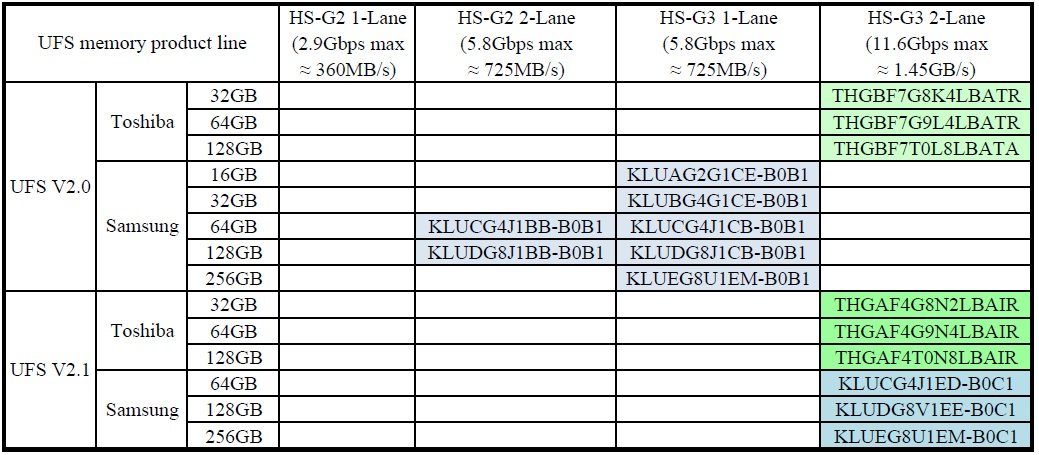
The good news is for Thailand and many countries around the world. It is an Exynos processor, which is more likely to get UFS 2.1 than (now not reported UFS 2.0), and if it is consistent with whether it is UFS 2.0 or 2.1, it has no speed. Very well There will only be added safety standards.
However, it is not very good. To advertise a particular specification and sell it, there is another specification that comes in. (Even though the notes are included), but it can confuse the customer to think for themselves. If no clear specification is specified.

![[HACK] VSCO Cam® - Version 4.4.1](https://blogger.googleusercontent.com/img/b/R29vZ2xl/AVvXsEgd1DU4FIy8mrO-umYWG1Gm0PcJ6o2u9cdLRdS8AIEL2bVizPtiw9tIixDinQiCWuIKpJpCfljEPqS5WUg4-aIVST2y9LP8fKKulSsS1B7O14Q6kVOx84yLW8YYZNQYM064Ezu0D32Dj9tv/s72-c/unnamed.png)


No comments:
Post a Comment